
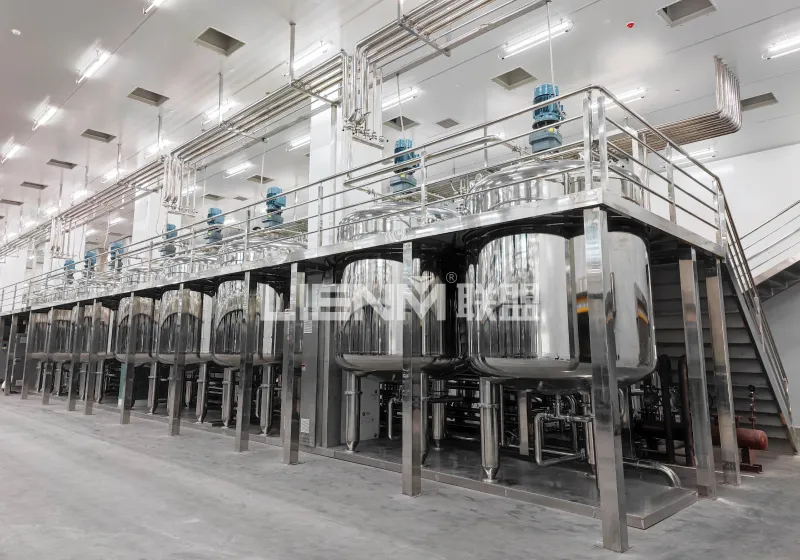
Vacuum Emulsifying Mixers are essential equipment for cosmetic, skincare, and pharmaceutical production lines. Understanding the cost and production capacity of these mixers can help factories plan their budgets and optimize manufacturing efficiency. Whether you are producing small batches for R&D or scaling up for commercial production, knowing the factors that affect Vacuum Emulsifying Mixer Price and how to select the right model can save time, reduce waste, and increase output while ensuring product consistency.
Factors Affecting Vacuum Emulsifying Mixer Cost
Production Capacity
One of the main drivers of Cosmetic Vacuum Emulsifying Mixer Cost is the production capacity. Small batch vacuum emulsifying mixer cost for R&D or boutique skincare lines will naturally be lower than large-scale mixers. For commercial production, the cost breakdown of vacuum emulsifying mixer by production capacity shows that higher capacity machines require more robust motors, larger tanks, and more precise control systems, which increases the overall investment. Knowing your daily or weekly output requirements helps in selecting the most cost-effective model. For beginners, learning How Emulsifying Machine Works can provide useful insights into selecting the right equipment.
Machine Configuration
The price of vacuum emulsifying mixer with high shear homogenizer is influenced by the type of emulsification and homogenization technology included. High-viscosity creams or lotions often need advanced high-shear mixers or vacuum homogenizers to ensure smooth, stable emulsions. Optional features such as automated feeding, temperature control, or digital displays can also raise the Vacuum Emulsifying Machine Cost, but these features improve consistency and reduce manual labor, making the investment worthwhile. Many cosmetic factories refer to Best Emulsifying Machine for Cosmetic to evaluate modern options.
Material and Build Quality
Materials such as stainless steel 304 or 316 are standard for cosmetic production to meet GMP and hygiene standards. A high viscosity vacuum mixer cost increases if the machine uses premium materials, robust sealing systems, and high-quality vacuum pumps. Factories should balance affordable vacuum emulsifying mixer for skincare manufacturing with compliance requirements and product quality. Investing in a well-built Emulsifying Machine reduces maintenance costs and downtime.
Common 304 and 316 Vacuum Emulsifying Mixer
Choosing the right tank volume and material is crucial for estimating vacuum emulsifying mixer cost for small cosmetic production or larger commercial lines. Below is a reference table of common market models, showing stainless steel type, typical applications, and estimated budget range:
| Tank Volume (Liters) | Material | Typical Applications | Budget Range (USD) |
|---|---|---|---|
| 20–50 L | 304/316 | Small batch R&D, skincare creams | 5,000 – 12,000 |
| 100–200 L | 304/316 | Boutique or pilot-scale cosmetic production | 12,000 – 25,000 |
| 300–500 L | 304/316 | Medium-scale production of creams, lotions, gels | 25,000 – 50,000 |
| 600–1000 L | 304/316 | Large-scale commercial production lines | 50,000 – 90,000 |
| 1200–2000 L | 316 | High-capacity factories, GMP-compliant lines | 90,000 – 150,000 |
Notes:
- 316 stainless steel is recommended for high-corrosive formulations or when stricter hygiene is required.
- Budget range includes basic automation; full automation, high-shear homogenizers, or custom configurations may increase cost.
- This table helps factories quickly estimate the right Vacuum Emulsifying Mixer for Face Creams model for their production capacity and budget while ensuring compliance and product quality.
Comparing Small and Large Batch Equipment
Small Batch Mixers
For small cosmetic production, a vacuum emulsifying mixer cost for small cosmetic production can range from a few thousand to tens of thousands of dollars. These models are ideal for startups or R&D labs testing new formulas. They are easier to operate, require less space, and allow quick product turnover. Users often search for small batch vacuum emulsifying mixer cost to estimate the right investment before scaling up.
Large Batch Mixers
In contrast, high-capacity units used in commercial manufacturing significantly affect the vacuum emulsifying mixer price comparison for small and large batches. Large-scale mixers feature bigger tanks, stronger motors, and enhanced vacuum systems. While the upfront investment is higher, the cost per unit produced drops, making these machines more economical for high-volume production. Factories also benefit from features such as automated cleaning and integrated control systems to improve production efficiency.
How Production Capacity Influences Price
Output and Efficiency
The relationship between vacuum emulsifying mixer price and production capacity is straightforward: higher capacity machines require larger components and more precise engineering. How production capacity affects vacuum emulsifying mixer price can be seen when comparing a 50L lab-scale mixer versus a 1000L production-line mixer. Large machines can handle multiple formulations per day, reduce batch changeover time, and maintain product consistency, which lowers operational costs despite the higher initial investment.
Energy and Operational Costs
A high-capacity mixer may consume more energy but often offers faster mixing and emulsification times, increasing overall throughput. Factories should consider not only vacuum homogenizer cost but also long-term operating costs. Investing in energy-efficient, GMP vacuum emulsifying mixer cost for large-scale production may initially be higher but yields better return on investment.
Additional Considerations When Budgeting
Certifications and Compliance
Machines that comply with CE, ISO, and GMP standards are essential for quality assurance and global market access. While this can increase the cosmetic vacuum mixer price, it protects your brand reputation and ensures regulatory compliance. Factories frequently compare cosmetic mixer price and vacuum mixing machine for skincare price to ensure they get certified, reliable equipment.
Optional Automation
Automated feeding, temperature monitoring, vacuum control, and digital interfaces can raise Vacuum Emulsifying Mixer Cost but reduce human error and production downtime. For modern production lines, investing in affordable cosmetic manufacturing equipment with automation helps increase efficiency and consistency.
Tips to Reduce Cost Without Compromising Quality
- Assess your true production needs before selecting a machine.
- Compare multiple suppliers for commercial vacuum emulsifying mixer price guide 2025.
- Consider modular machines that allow scaling up without replacing the entire unit.
- Evaluate long-term operational costs, including energy consumption, maintenance, and spare parts.
- Choose a mixer with proven reliability and available technical support to avoid costly downtime.
Global Vacuum Emulsifying Mixer Manufacturers
To further assist buyers in selecting the right equipment, comparing leading global manufacturers provides insight into experience, advantages, and delivery expectations. Below is a table of five well-known international brands, including LIENM:
| Manufacturer | Established | Key Advantages | MOQ | Lead Time |
|---|---|---|---|---|
| LIENM | 1983 | 40+ years manufacturing experience, custom intelligent automation lines, CE/ISO/GMP certified | 1 set | 45–60 days |
| GEA Group (Germany) | 1881 | High-quality engineering, robust large-capacity units, global support | 1 set | 60–90 days |
| IKA Werke (Germany) | 1910 | Precision mixers, lab-to-industrial scaling, innovative homogenizers | 1 set | 30–60 days |
| SPX FLOW (USA) | 1912 | High shear, sanitary design, versatile applications in cosmetics and pharma | 1 set | 45–75 days |
| Admix Inc. (USA) | 1987 | Efficient high-viscosity mixing, advanced vacuum emulsification technology | 1 set | 40–70 days |
Notes:
- Lead time depends on specific configuration, automation, and shipping destination.
- MOQ refers to the minimum order quantity per production line or machine set.
- Each manufacturer has unique advantages in terms of technology, scale, and customer support.
This comparison complements tank volume and budget considerations, helping factories choose the right Vacuum Emulsifying Mixer in Cosmetic production line solution.
Understanding Vacuum Emulsifying Mixer Cost involves considering production capacity, machine configuration, materials, certifications, and optional automation. Small batch machines are perfect for R&D and startups, while large-capacity units maximize efficiency and reduce cost per unit in commercial production. Factories that carefully evaluate high viscosity vacuum mixer cost and compare suppliers will optimize budgets and improve production line efficiency. Choosing the right equipment ensures consistent, high-quality cosmetic products while saving operational costs.
LIENM: Delivered Over 50000 Machines Globally
With more than 500 clients in 90+ countries and over 1,000 completed projects, our vacuum emulsifying mixers and cosmetic production equipment help brands scale efficiently while maintaining consistent product quality. Partner with LIENM to optimize your production line and achieve reliable, high-output manufacturing.
FAQ
Q1: How much does a small batch vacuum emulsifying mixer cost?
A1: Small batch models typically range from a few thousand to tens of thousands of dollars, depending on capacity, material, and optional features.
Q2: What factors affect the price of a vacuum emulsifying mixer?
A2: Production capacity, high-shear homogenization, material quality, automation features, and certifications like CE, ISO, or GMP significantly influence the cost.
Q3: Can a vacuum emulsifying mixer handle both creams and lotions?
A3: Yes, most modern vacuum emulsifying mixers can process various viscosities, including creams, lotions, gels,