

Starting a cosmetic production line can be exciting, but it also comes with its challenges. Choosing the right cosmetic mixing equipment is one of the most critical steps for manufacturers in Europe, the Middle East, or North America. Proper equipment ensures your lotions, creams, and skincare products are consistent, high-quality, and safe for consumers. Understanding mixing equipment price, evaluating different types of cosmetic mixers, and following a clear buying guide can save you time, money, and operational headaches while boosting overall production efficiency.
Cosmetic Mixing Equipment
What Is Cosmetic Mixing Equipment?
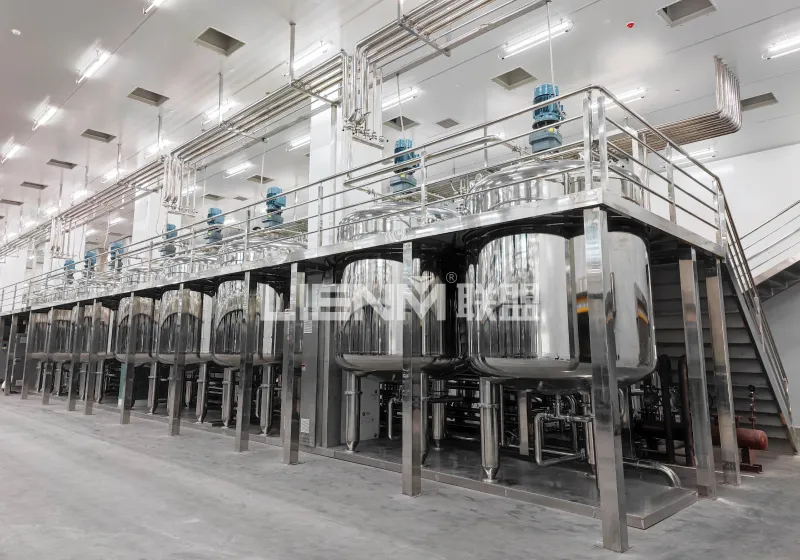
Cosmetic mixing equipment refers to machines designed to blend, emulsify, and homogenize ingredients for creams, lotions, shampoos, and other beauty products. Popular types include cosmetic blending equipment, emulsifying mixers for cosmetics, and industrial cosmetic mixers. For small-scale businesses, stainless steel cosmetic mixing machines for sale online provide flexibility, while large manufacturers often invest in high shear cosmetic mixing equipment for sale to achieve faster and more uniform results.
Key Functions of Cosmetic Mixers
A good cosmetic mixer ensures that ingredients are evenly distributed, maintains product stability, and prevents separation over time. Modern machines often combine heating, cooling, and vacuum functions to meet formulation requirements. Understanding these features is essential when reviewing a cosmetic mixer buying guide, as different formulas require different levels of shear and mixing time.
Evaluating Mixing Equipment Price
Factors Affecting Price
Mixing equipment price depends on several factors including capacity, automation level, material quality, and brand reputation. A small scale cosmetic mixing equipment price can be much lower than industrial-scale machines, but cheaper models may lack features that improve production efficiency. In regions like Dubai or Toronto, manufacturers often compare cosmetic mixer price lists 2025 to find equipment that balances cost with performance.
Comparing Price vs. Value
When choosing cosmetic mixing equipment for sale, it’s important to consider the long-term return on investment. Affordable cosmetic mixing equipment may reduce upfront costs, but high-quality industrial cosmetic mixers often reduce labor needs, improve product consistency, and minimize maintenance downtime. Checking cosmetic mixer price comparisons online helps manufacturers make informed purchasing decisions.
How to Choose Cosmetic Mixing Equipment
Assessing Production Needs
Start by evaluating your production volume, product types, and formulation complexity. For skincare lines, vacuum emulsifying mixing equipment price guides provide insights into machines that can handle delicate ingredients without compromising quality. Small cosmetic businesses in cities like London or Riyadh often need flexible equipment capable of producing multiple product lines efficiently.
H4: Key Features to Look For
When reviewing a cosmetic mixing machine buying guide, consider features such as heating and cooling jackets, variable speed mixing, vacuum capabilities, and ease of cleaning. Cosmetic blending equipment with these features can streamline operations and ensure compliance with hygiene standards. Emulsifying mixers for cosmetics also provide better particle size reduction, which is crucial for lotions and creams.
H4: Supplier Considerations
Choose suppliers with proven experience in the cosmetic industry. Industrial cosmetic equipment suppliers often provide technical support, installation, and training. Checking reviews and testimonials can help identify reliable manufacturers. For online purchases, verify that cosmetic mixing equipment for sale online comes with warranty and after-sales service.
Benefits of Using the Right Cosmetic Mixer
Improved Product Quality
High-quality mixing equipment ensures homogenous mixtures, consistent texture, and stable formulations. Cosmetic emulsifying machines for sale allow manufacturers to achieve premium product quality, meeting consumer expectations in competitive markets.
Increased Production Efficiency
Automated cosmetic mixers reduce manual labor, speed up production, and minimize errors. Industrial cosmetic mixer buying tips often emphasize selecting equipment with programmable controls, which allows for repeatable processes and higher throughput.
Cost Savings Over Time
Although investing in best cosmetic mixing equipment for small business may seem expensive upfront, long-term benefits include reduced wastage, fewer rejected batches, and lower labor costs. Proper selection based on a cosmetic mixer buying guide ensures that production lines in countries like Germany or Saudi Arabia operate efficiently.
Common Challenges and Solutions
Maintaining Consistency
Inconsistent mixing can ruin product quality. Using vacuum emulsifying mixing equipment or high shear cosmetic mixers helps maintain uniformity across batches. Regular calibration and operator training are crucial.
Equipment Downtime
Unexpected breakdowns can halt production. Selecting industrial cosmetic mixers from reputable suppliers and following recommended maintenance schedules reduces downtime.
Choosing the Right Size
Small-scale operators may overinvest in large mixers, while large factories may underinvest, leading to bottlenecks. A detailed cosmetic mixing machine buying guide helps determine the ideal capacity for your operation.

Top 6 Global Cosmetic Mixing Equipment Manufacturers Comparison
For manufacturers and skincare brands, choosing the right cosmetic mixing equipment can be overwhelming. Here’s a comparison of six globally recognized cosmetic mixing equipment suppliers, including LIENM, to help you make a quick decision based on price, performance, lead time, and their main advantages.
| Manufacturer | Price Range | Performance Features | Lead Time | Key Strength / Advantage |
|---|---|---|---|---|
| LIENM (China) | $15,000 – $120,000 | High shear & vacuum emulsifying mixers, customizable automation | 4–8 weeks | Flexible solutions for small to large-scale production, global after-sales support |
| IKA (Germany) | $20,000 – $150,000 | Precision mixing, laboratory to industrial scale, high reproducibility | 6–10 weeks | Best for R&D and high-precision cosmetic formulations |
| GEA Group (Germany) | $50,000 – $250,000 | Industrial mixers, continuous production, robust durability | 8–12 weeks | Heavy-duty industrial production lines, large batch capacity |
| Votator (USA) | $30,000 – $180,000 | Continuous high-speed mixers, advanced cooling systems | 6–10 weeks | Excellent for viscous creams and lotions, energy-efficient design |
| Silverson (UK) | $25,000 – $200,000 | High shear mixers, scalable units, easy cleaning | 5–9 weeks | Versatile for both R&D and production, suitable for emulsions and suspensions |
| Yamato (Japan) | $15,000 – $100,000 | Compact mixers, precision control, low footprint | 4–8 weeks | Ideal for small-scale cosmetic production and laboratory testing |
Prices and lead times are indicative, and LIENM stands out for offering both cost-effective solutions and international technical support, bridging small business needs and large-scale industrial demands.

Need Cosmetic Manufacturing Solutions?
LIENM provides complete integrated systems and turnkey solutions tailored to your business.
LIENM’s Mixing Solution
LIENM has been a trusted manufacturer of cosmetic production equipment since 1983. With factories in Guangzhou and Yangzhou and offices worldwide, LIENM provides a wide range of cosmetic mixing equipment for sale, from small-scale stainless steel mixers to industrial vacuum emulsifying machines. Our technical team helps clients select the right cosmetic mixer, optimizes production lines, and provides installation, training, and maintenance support. Manufacturers in Europe, the Middle East, and North America rely on LIENM to improve production efficiency, ensure consistent product quality, and solve real-world production challenges.
FAQ
Q1: How much does cosmetic mixing equipment cost?
Prices vary based on capacity, features, and supplier. Small-scale machines may cost a few thousand dollars, while industrial high shear mixers can exceed tens of thousands.
Q2: How do I choose the right cosmetic mixer for my production line?
Consider production volume, product type, automation needs, and features such as vacuum, heating/cooling, and shear capabilities. Following a cosmetic mixer buying guide helps make an informed decision.