

Cosmetic creams are a cornerstone of the skincare industry, offering hydration, nourishment, and targeted benefits like anti-aging or brightening. The quality and performance of a cream largely depend on its ingredients, which typically range from 15 to 30 different components, including oils, emulsifiers, humectants, thickeners, preservatives, and active functional ingredients. Understanding cosmetic cream ingredients is essential for manufacturers, formulators, and brand owners to produce safe, effective, and market-competitive products. In this article, we explore the common ingredients in cosmetic creams, their functions, and their importance in cream formulation.

Base Ingredients / Carrier Ingredients
The foundation of any cream is its base ingredients, which provide texture, stability, and compatibility with active components. Proper selection and proportioning of base ingredients are critical in Cream Formulation to achieve the desired performance.
Water (Aqua)
Water acts as the primary solvent in most creams. It dissolves hydrophilic ingredients and helps achieve the desired cream consistency. Proper microbial protection and pH control are crucial when using water in formulations.
Oils & Fats
Oils and fats, including plant oils (like jojoba, almond, or sunflower oil) and mineral oils, provide moisturization and enhance skin softness. They also improve the cream’s spreadability and overall sensory experience, which is important when evaluating Cream Cosmetic Types for different applications.
Emulsifiers
Emulsifiers stabilize oil and water mixtures, ensuring a smooth, uniform cream. Common types include PEG derivatives, glycerides, and lecithin. The right emulsifier selection is critical for long-term product stability.
| Ingredient | Examples | Primary Function | Typical Percentage |
|---|---|---|---|
| Water (Aqua) | Purified water, deionized water | Acts as the main solvent, dissolves hydrophilic ingredients, and determines overall cream texture and viscosity | 50% – 80% |
| Oils & Fats | Jojoba oil, almond oil, sunflower oil, mineral oil | Provides moisturization, improves skin softness, enhances spreadability and sensory feel | 10% – 30% |
| Emulsifiers | PEG derivatives, glyceryl stearate, lecithin | Stabilizes oil and water phases, prevents separation, and ensures uniform cream structure | 2% – 6% |
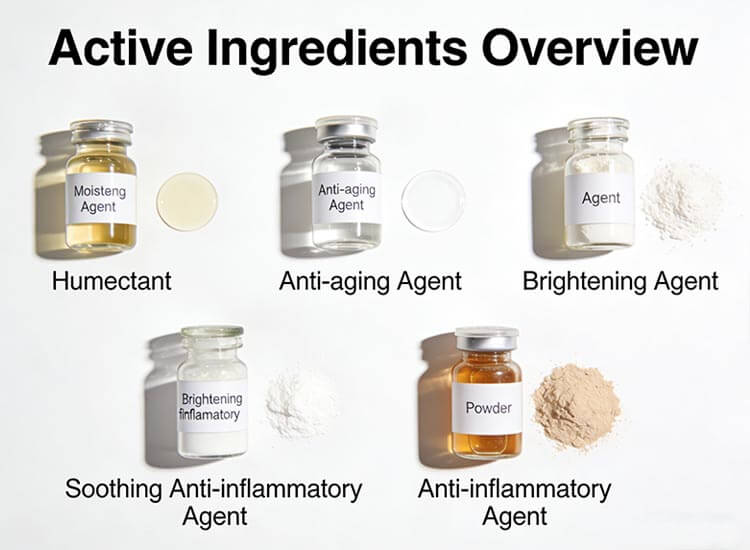
Active Ingredients / Functional Components
Active ingredients deliver the primary benefits of the cream, such as hydration, anti-aging, or brightening. Selecting appropriate actives is a key step in Cream Applications in Skincare.
Humectants
Ingredients like glycerin, hyaluronic acid, and propylene glycol attract and retain moisture in the skin, keeping it soft and hydrated.
Anti-aging Agents
Compounds such as retinol (vitamin A), peptides, and coenzyme Q10 stimulate collagen production, reduce wrinkles, and improve skin elasticity.
Brightening Agents
Ingredients like vitamin C derivatives and niacinamide help fade dark spots and even skin tone.
Soothing & Anti-inflammatory Agents
Natural extracts like aloe vera, witch hazel, and chamomile reduce irritation and calm sensitive skin.
| Ingredient Type | Common Examples | Primary Function | Typical Usage Level |
|---|---|---|---|
| Humectants | Glycerin, hyaluronic acid, propylene glycol | Attract and retain moisture, keeping skin hydrated and soft | 2% – 10% |
| Anti-aging Agents | Retinol (vitamin A), peptides, coenzyme Q10 | Support collagen production, reduce wrinkles, improve skin elasticity | 0.1% – 2% |
| Brightening Agents | Vitamin C derivatives, niacinamide | Help fade dark spots and promote a more even skin tone | 0.5% – 5% |
| Soothing & Anti-inflammatory Agents | Aloe vera, witch hazel, chamomile | Reduce irritation, calm sensitive skin, and support skin comfort | 0.1% – 3% |

Preservatives
Preservatives are essential to protect creams from microbial contamination and extend shelf life. Understanding preservative choice is part of the broader topic of Cream Manufacturing.
Common Options
Common options include parabens, phenoxyethanol, and preservative blends. Safety and regulatory compliance are critical to ensure consumer protection while maintaining product stability.

Texture & Stability Enhancers
These ingredients improve the cream’s physical properties and ensure a pleasant user experience.
Thickeners / Gelling Agents
Agents such as carbomers and xanthan gum enhance viscosity and improve spreadability.
Stabilizers / Antioxidants
Ingredients like vitamin E and BHA prevent oxidation, maintaining product quality over time. Poor handling of these additives can sometimes lead to Cream Manufacturing Problems such as separation or instability.

Fragrances and Colorants
Fragrances
Fragrances, including essential oils or synthetic scents, improve the sensory appeal of creams.
Colorants
Colorants, such as cosmetic-grade dyes, enhance product aesthetics.
It is crucial to select hypoallergenic and regulation-compliant options, especially when producing different Cream vs Ointment vs Gel vs Lotion forms.
Regulatory & Safety Considerations
Manufacturers of cosmetic creams must strictly adhere to global cosmetic regulations to ensure their products are safe and compliant. Key regulatory frameworks include the FDA in the United States, the European Union (EU) cosmetic regulations, and the CFDA (now NMPA) in China. Ingredients used in formulations must be accurately labeled and thoroughly safety-tested to prevent potential skin irritation, allergic reactions, or other adverse effects. Ensuring regulatory compliance not only protects consumers but also guarantees that the product is market-ready and trusted by both businesses and end-users.

Cream Manufacturing Solutions
Understanding the common ingredients in cosmetic creams is fundamental for producing high-quality skincare products. Base ingredients, active compounds, preservatives, and stabilizers all play vital roles in determining performance, safety, and consumer satisfaction. For manufacturers, selecting the right ingredients goes hand-in-hand with choosing compatible production equipment, such as high-shear mixers, vacuum emulsifiers, and automated filling machines, to ensure consistent, efficient, and scalable production.
FAQ
What is the function of water in cosmetic cream formulations?
Water is the primary base of most cosmetic creams, often making up 50–80% of the formulation. It dissolves water-soluble ingredients, improves spreadability, and helps create the lightweight textures commonly preferred in mass-market and dermatological skincare products.
Are natural ingredients better than synthetic ingredients in cosmetic creams?
Both natural and synthetic ingredients can be safe and effective when properly formulated. For example, brands like The Ordinary rely heavily on synthetic actives for consistency, while brands such as Weleda emphasize natural extracts. Stability and safety depend more on formulation quality than ingredient origin.
Which ingredients provide moisturizing effects?
Moisturizing effects mainly come from humectants like glycerin and hyaluronic acid. Clinical data shows that hyaluronic acid can hold up to 1,000 times its weight in water, which is why it is widely used in moisturizers from brands such as Neutrogena and Vichy.
Are preservatives necessary in cosmetic creams?
Yes, preservatives are essential in water-based creams. Regulatory bodies like the FDA and EU Cosmetics Regulation require microbial safety testing, as unpreserved creams can develop bacteria or mold within days under normal storage conditions.
How do manufacturers ensure ingredient safety in cosmetic creams?
Manufacturers follow regulatory standards such as FDA guidelines in the U.S. and EU Regulation (EC) No 1223/2009. Ingredients undergo toxicological assessments and stability testing before products are released to the market.
Can cosmetic cream ingredients cause skin sensitivity?
Some ingredients may cause sensitivity depending on skin type and concentration. Studies show that fragrance-related reactions account for a significant portion of cosmetic-related skin complaints, which is why many brands now offer fragrance-free formulations.
How does ingredient selection affect cream manufacturing?
Ingredient selection influences mixing efficiency, emulsification stability, and filling performance. Incompatible ingredients can lead to separation or air entrapment, which are common issues addressed during industrial cream manufacturing processes.