

— Key Differences, Advantages, and Equipment Selection Guide
In cosmetic manufacturing, choosing the right production method is critical to product quality, operational efficiency, and long-term scalability. For moisturizing cream production, manufacturers typically adopt either batch production or continuous production, each with distinct advantages and limitations.
This article explains the difference between batch and continuous cosmetic cream production, compares their processes and equipment requirements, and helps manufacturers determine which method best fits their production goals.

Cosmetic Cream Production Methods
Cosmetic cream manufacturing involves precise control of raw materials, emulsification conditions, temperature, and shear force. The chosen production method directly affects emulsion stability, texture consistency, production capacity, and operating cost.
The two most common cream manufacturing methods are:
- Batch cosmetic cream production
- Continuous cosmetic cream production
Understanding how these systems work is essential before investing in Cream Manufacturing equipment.
What Is Batch Cosmetic Cream Production?
Batch cream production is a step-by-step manufacturing process where a fixed quantity of cream is produced in a single vessel during each cycle.
Typical Batch Cream Manufacturing Process
- Raw material weighing and preparation
- Heating of oil and water phases
- Emulsification under controlled shear
- Cooling, homogenization, and deaeration
- Discharge and transfer to filling or storage
Batch sizes can range from small laboratory volumes to several thousand liters in industrial-scale production. For more details on different Cream Cosmetic Types, manufacturers can explore formulation guides.
Equipment Used in Batch Cream Production
- Vacuum emulsifying mixer
- Heating and cooling jacket system
- Bottom homogenizer or high-shear mixer
- Vacuum system for deaeration
Batch systems are widely used for moisturizing creams, functional creams, and customized formulations due to their flexibility. This makes it essential to understand the fundamentals of Cosmetic Cream production before scaling up.

What Is Continuous Cosmetic Cream Production?
Continuous cream production is a non-stop manufacturing process in which raw materials are continuously fed, mixed, emulsified, and discharged without interruption.
How Continuous Cream Manufacturing Works
- Automated dosing of oil and water phases
- Inline emulsification using high-shear mixers
- Continuous temperature and flow control
- Direct transfer to downstream filling systems
This method is commonly used for large-volume cosmetic cream manufacturing where product formulations remain stable over long production runs. Continuous processes often rely on advanced Cream Emulsification systems for consistent quality.
Equipment Used in Continuous Cream Production
- Inline mixer or continuous emulsification system
- Automated dosing and control units
- Heat exchangers
- Continuous production line integration
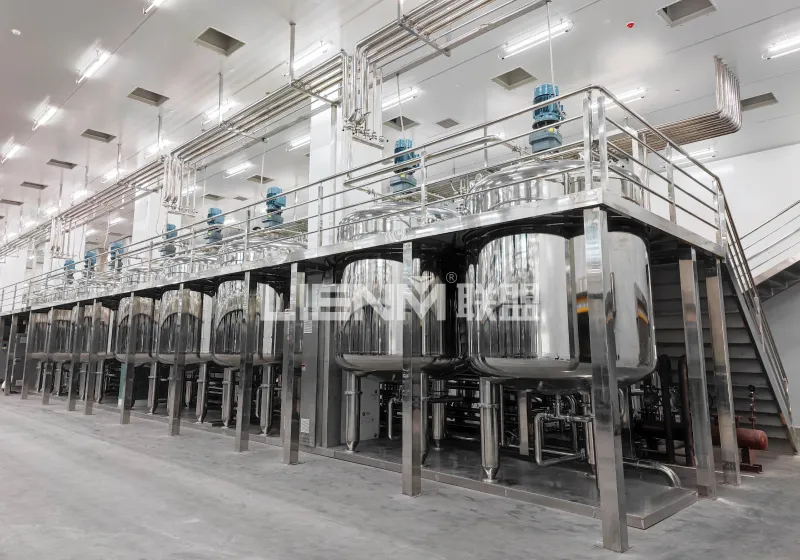
Batch vs Continuous Cream Production: Key Differences
| Comparison Factor | Batch Production | Continuous Production |
|---|---|---|
| Production mode | Step-by-step | Non-stop |
| Output volume | Low to medium | High |
| Formula flexibility | High | Limited |
| Automation level | Manual to semi-automatic | Fully automatic |
| Changeover time | Short | Long |
| Initial equipment cost | Lower | Higher |
This comparison clearly shows why batch vs continuous cream manufacturing is not a one-size-fits-all decision. For factories encountering common Cream Manufacturing Problems, the production method choice can significantly reduce defects.
Pros and Cons of Batch Cream Manufacturing
Advantages of Batch Production
- High formulation flexibility
- Ideal for frequent product changes
- Easier quality control and traceability
- Lower initial investment
Batch production is particularly suitable for OEM manufacturers, startups, and brands developing multiple moisturizing cream variants.
Limitations of Batch Production
- Lower productivity compared to continuous systems
- Higher labor involvement
- Longer production cycles per batch
Pros and Cons of Continuous Cream Manufacturing
Advantages of Continuous Production
- High efficiency for mass production
- Consistent product quality over long runs
- Reduced labor cost through automation
- Easy integration with filling and packaging lines
Limitations of Continuous Production
- Limited flexibility for formula changes
- High equipment and maintenance cost
- Complex system control and cleaning
Continuous systems are best suited for standardized cosmetic creams produced at industrial scale.

Which Cream Production Method Should You Choose?
Based on Production Scale
- Small batch cosmetic cream manufacturing → Batch production
- High-volume industrial cream production → Continuous production
Based on Product Type
- Functional creams, frequent upgrades → Batch systems
- Standard moisturizing creams → Continuous systems
Based on Budget and Automation Level
Manufacturers with limited budgets or frequent product updates often prefer batch systems, while large factories focus on continuous production to maximize efficiency.
Hybrid Solutions: Combining Batch and Continuous Systems
Many cosmetic factories adopt semi-continuous or hybrid cream production lines, combining:
- Batch vacuum emulsifying mixers for formulation
- Continuous transfer and filling systems
Hybrid solutions balance flexibility and efficiency, making them ideal for growing manufacturers.

Impact on Cream Quality and Stability
Production method selection directly affects:
- Emulsion stability
- Viscosity and texture control
- Air incorporation and deaeration efficiency
Batch systems allow precise control during emulsification, while continuous systems ensure uniformity once parameters are optimized. Proper equipment selection plays a crucial role in minimizing defects such as phase separation or air bubbles.
Equipment Selection Guide for Cream Manufacturers
When choosing cream production equipment, consider:
- Target production capacity
- Formula complexity and change frequency
- Automation requirements
- Future scalability
For batch cream manufacturing, vacuum emulsifying mixers remain the industry standard. For continuous production, inline mixers and continuous emulsification systems are essential for stable, high-volume output.
Batch or Continuous—Making the Right Decision
There is no universally superior method in batch vs continuous cosmetic cream production. The optimal choice depends on production scale, product strategy, and long-term manufacturing goals.
LM-YDXGJ-B(移动式在线旋盖机)夹瓶喷码机上料.webp)
Cream Manufacturing Solutions
Upgrade Your Cream Production with LIENM
By understanding the strengths and limitations of each system, cosmetic manufacturers can invest in the right equipment and build a production line that ensures consistent quality and sustainable growth.
LIENM, a China-based cosmetic equipment manufacturer founded in 1983, offers smart automated lines, strict quality control, and CE/ISO/GMP certified machines, exported to USA, Germany, UK, France, Brazil, India, Japan, Canada, Russia, Australia, Italy, Mexico.